
By Moumita Mukherjee
With inputs from Surbhi Tiwari, Catalytic Corps
Karauli, a quiet district about 130 km from Jaipur, has long lived under the shadow of recurring droughts. Declining rainfall linked to climate change has left vast tracts of land barren, drying up natural water sources and placing enormous strain on agriculture and livestock rearing—the backbone of rural life here. Yet amid these stark challenges, stories of resilience and community-led transformation are beginning to emerge.
One such story unfolds at Banda Bari ke Paas talab in Fatehpur Panchayat of Masalpur block, where a waterbody restoration effort earlier this year has started to reshape both the landscape and local livelihoods. The work was carried out under the NITI Aayog Aspirational Blocks Program, spearheaded by block officials with strong support from District Collector Mr. Neelabh Saxena, IAS. Together, they created an additional 25 crore litres of water storage capacity for this drought-prone region.
A Trek That Reveals the Terrain—and the Challenge
Reaching the talab is no easy task. The road tapers to a point where only two people can walk side by side, forcing visitors to trek the final 200–300 meters. A steep climb up a rocky ridge finally reveals the waterbody, nestled between hills and glimmering in the harsh summer sun.
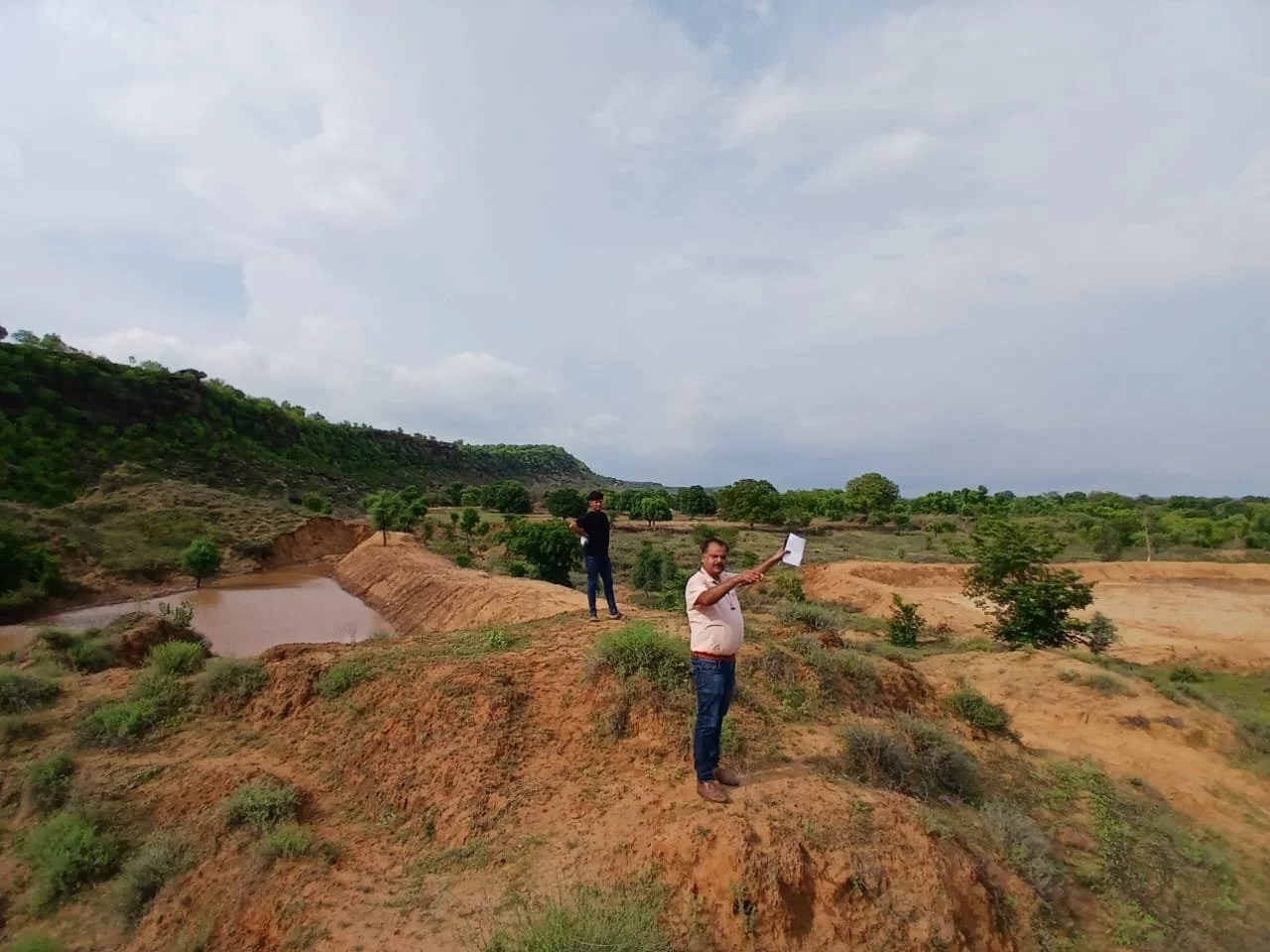
During our visit, temperatures touched 48 degrees, and we found ourselves shielding our eyes from the glare. From the hilltops, silhouettes of local residents looked on with curiosity. “This is a tribal belt,” explained Mr. Avinesh Singh, the block LDC accompanying us. Most families here are herders and struggle daily for essentials like water.
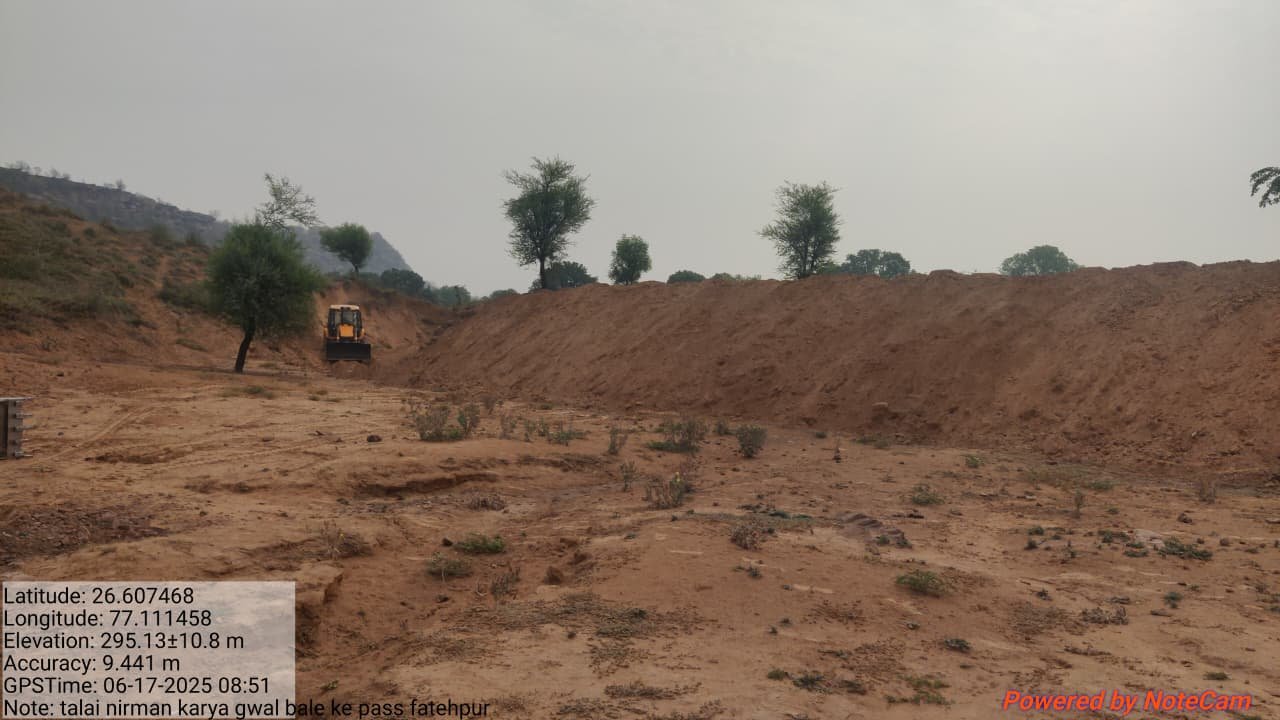
In such terrain, the fact that a JCB excavator managed to reach the site and work for an entire week is nothing short of remarkable. It reflects both administrative resolve and the community’s determination to bring change to one of the most overlooked corners of the district.
Why This Talab Mattered Most
When we asked Mr. Singh why this particular waterbody was prioritized, his response was simple and powerful.
“The locality depends heavily on livestock rearing, making the talab essential for their livelihoods. And it plays a crucial role in groundwater recharge, helping farmers sustain their agriculture.”
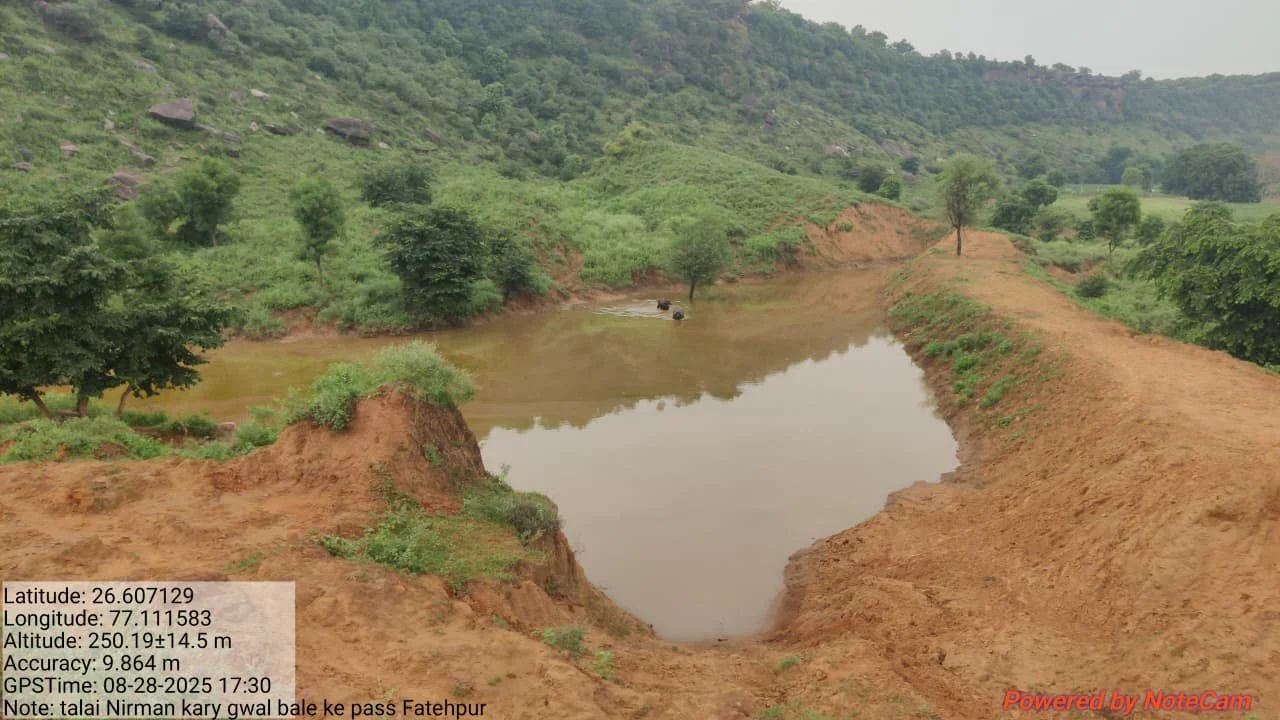
At the time of our visit, the talab held 15–20 feet of water from just one pre-monsoon shower. With the monsoon rains now replenishing it, the waterbody is full—and has the potential to retain water year-round.
A Lifeline for 300 Households
This restored talab is more than just a water source. For about 300 local households, it is a renewed lifeline—providing water for livestock, improving groundwater levels, and restoring confidence in their ability to sustain their farms and families.
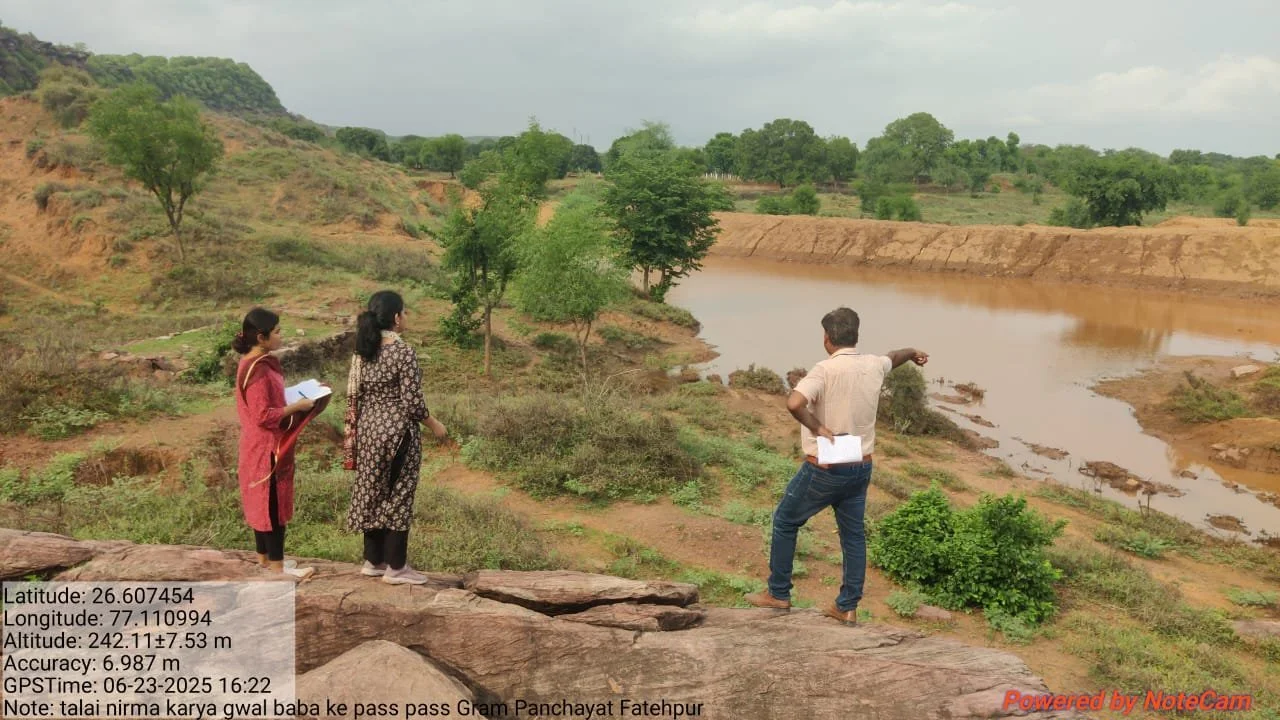
In a region where drought has shaped lives for generations, the transformation of this small waterbody is a reminder of what focused public programs, committed officials, and community participation can achieve together. It signals a shift—from scarcity to security, from decline to possibility.
And in the heart of a drought-hit district, it stands as a quietly powerful symbol of what climate resilience can look like on the ground.