
Farming Reimagined: A Rural Movement Redefining Agriculture in Maharashtra
Written by Anubha Sah & Amit Chandra
with inputs from Sharmista Chaudhury
It’s not every day that a small village temple compound turns into a site of policy insight, economic renewal, and human resilience. However, that is exactly what we saw in a taluka in Sambhajinagar District, Maharashtra when we visited a couple of weeks ago. Our team had joined a gathering of about 30 farmers, women draped in vivid sarees, men adjusting their Gandhi caps under the harsh sun. There was no fanfare, just a quiet, determined energy. These were not recipients of some government subsidy scheme. They were participants of a remarkable movement that we predict will sweep Maharashtra’s rural landscape—Paani Foundation’s Farmer Cup. These farmers had come together to reflect, to share, and most importantly, to celebrate their transformation with us.
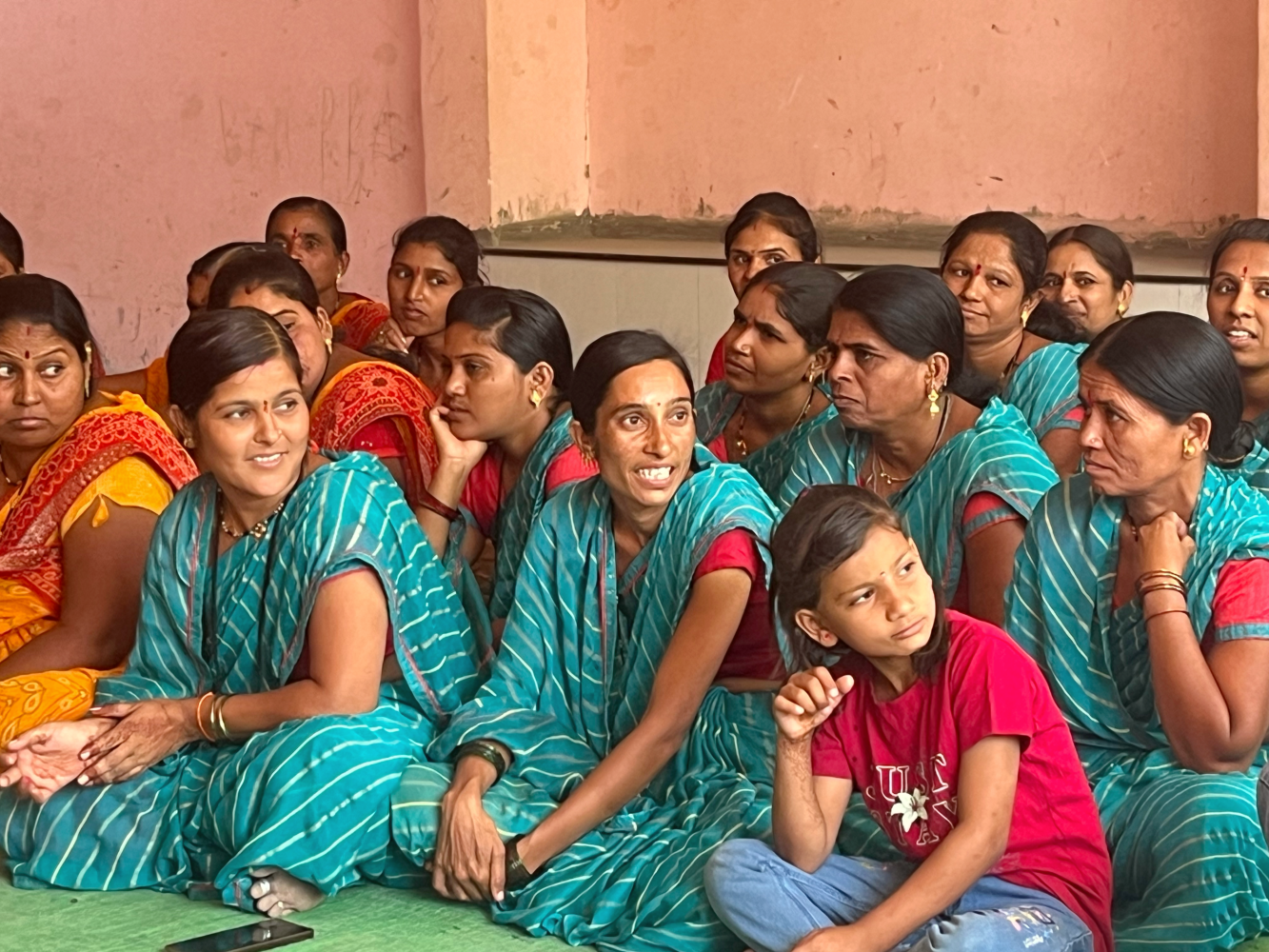
For those unfamiliar, Paani Foundation began in 2016 as an ambitious experiment to address drought in Maharashtra, a topic of deep interest to our foundation as well. Co-founded by Aamir Khan, Kiran Rao, and Satyajit Bhatkal, its mission was to combat water scarcity by mobilizing communities at scale. The model was radical in its simplicity: turn villages into self-driven units of change, using competition as fuel. The Water Cup, their flagship initiative, led to a humungous 550 billion litres of water storage created by the people, for the people. No contractors. No handouts. Just communities doing work and addressing a big sticky wicked problem.
Dial forward many years, the Farmer Cup takes things one step further. It brings the same spirit of dignity, competition, and collective ownership to farming, which is arguably one of India’s most complex, stagnant, and emotionally loaded sectors.
A New Kind of Farming Model
The Farmer Cup is a 14 to 15-month gamified contest where farmer groups across 40+ talukas adopt sustainable practices like water budgeting, crop diversification, and natural pest control. But unlike most rural interventions, this isn’t designed in an office in Mumbai or Delhi. It’s designed around agency, around what farmers can do for themselves if given the tools, the knowledge, and, crucially, the belief that they can.
Very importantly, these are designed to work via the principle of collectivization, which is extremely powerful when most farmland ownership in the region is fragmented. Farmers can harness the benefits of purchasing power, selling power, labour economies, and importantly holding each other’s hands through difficult periods of time. A technology backbone is used to help ensure that all this happens efficiently with accountability. The results are hard to ignore.
A 2024 KPMG study showed that participating farmers saw, on average witnessed a 163% jump in net profit per acre driven by a 71% increase in yield and cost reductions that brought input expenses down from ₹30-40K per acre to as low as ₹7-10K. Pesticide use plummeted and peer-to-peer learning skyrocketed. Across the board, what we saw wasn’t just behaviour change, it was mindset change.
A Revolution Beyond Economics: Women at the Helm
What struck us the most, though, was the leadership of women in high performing collectives. In the 2024 edition alone, over 50% or ~2,000 of the collectives that participated were women-led. We were wowed by the prowess of the women who were coordinating, budgeting, planning, and in many cases, earning their first independent incomes, outpacing the rest of the village. They were taking the fruits of their labour and branching out into micro-enterprises: briquette-making, residue-free sanitary products, community kitchens.
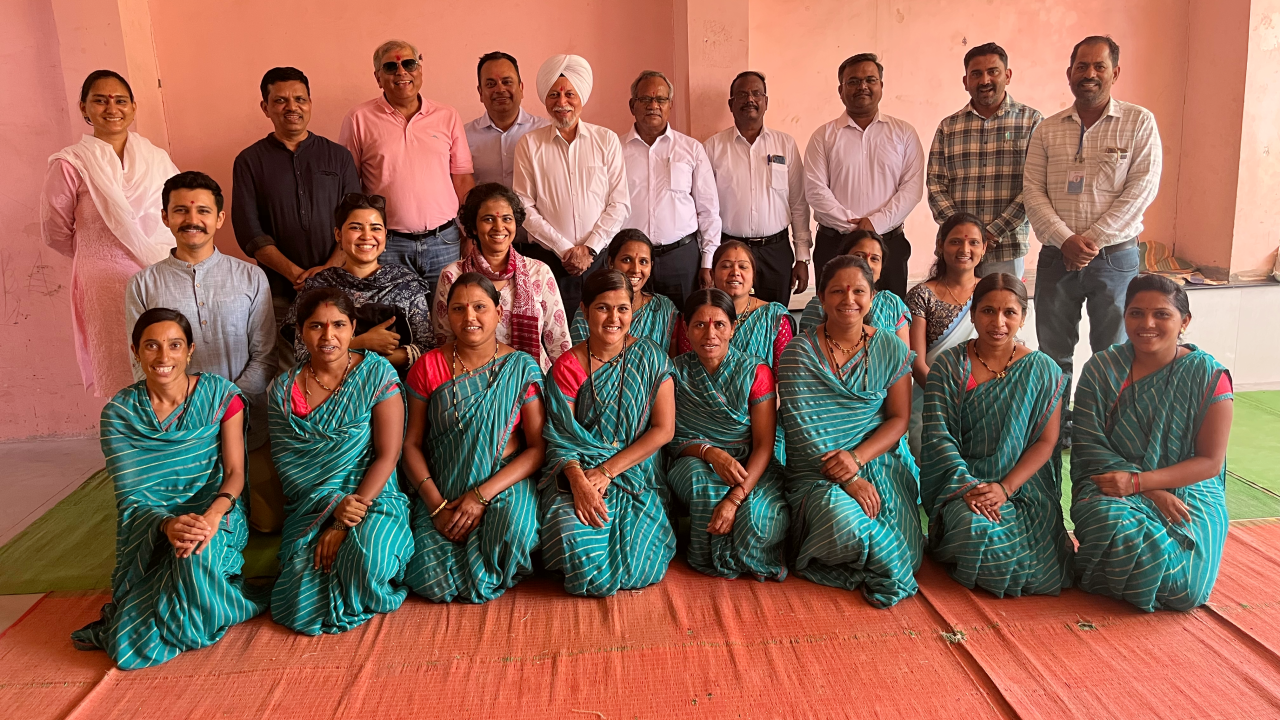
A quiet social revolution is brewing in rural India, and it is wearing a saree and carrying a ledger. A few women we spoke to shared that they now see themselves as leaders, not just as farm labour. That subtle shift—from “helping on the farm” to “running the show” and demonstrating how agriculture should really be done efficiently—may well be one of the most important outcomes of the Farmer Cup.
No One Was Complaining. Everyone Was Solving.
There was a moment during one of the group discussions when a farmer stood up—not to lodge a grievance, but to excitedly share a new cropping pattern he was planning. He had calculated input costs, adjusted for soil health, and figured out how to get the produce directly to the mandi. That is the power of this model. It doesn’t solve every problem for the farmer, but it does equip them to solve problems for themselves. Paani Foundation doesn’t position itself as a service provider, or someone giving subsidies or handouts. It shows up as a catalyst. And that distinction is everything. It is about putting dignity back into farming for tens of thousands of farmers.
And Now, Maharashtra Wants More
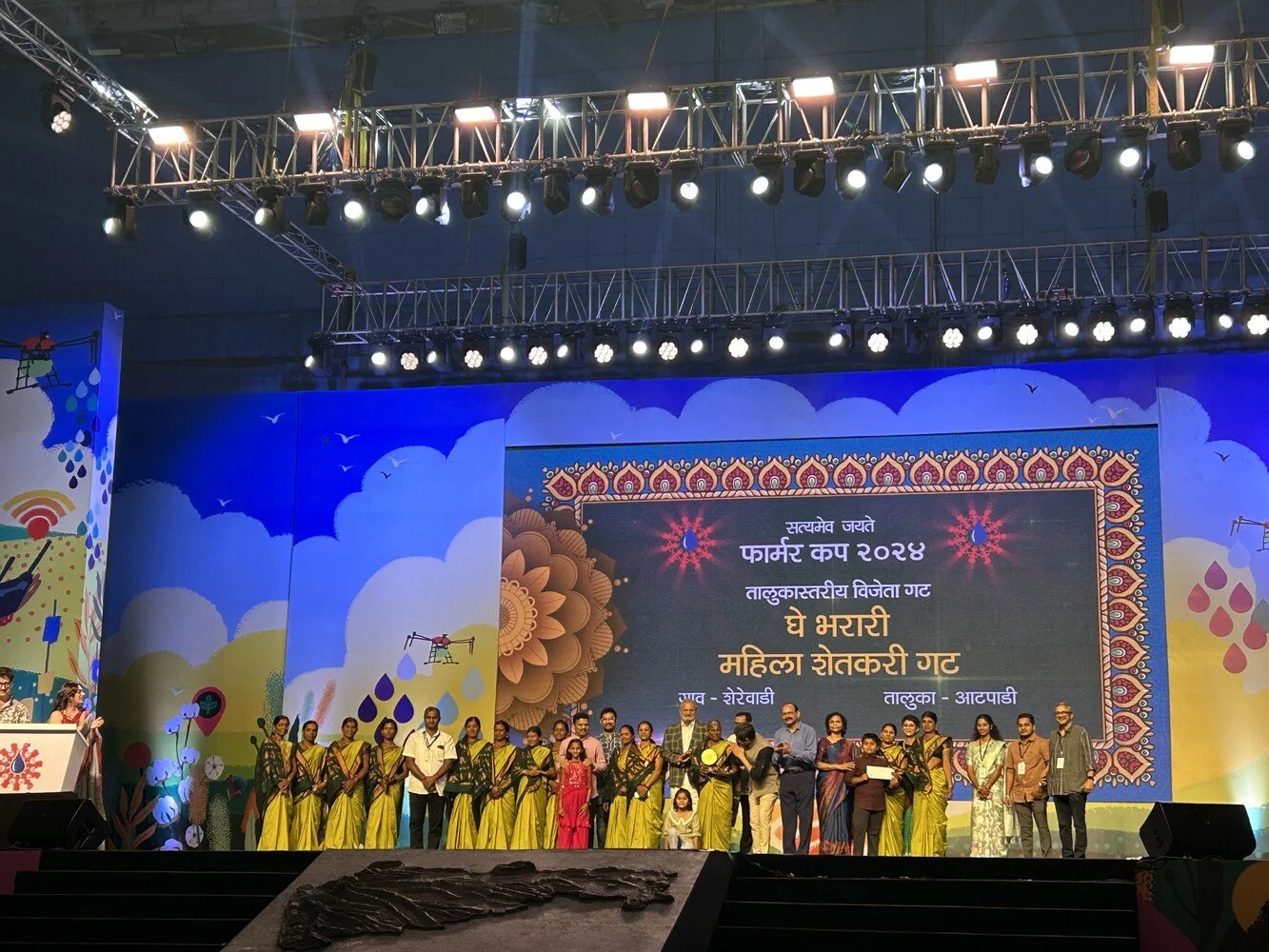
In March this year, at the Farmer Cup awards ceremony in Pune, Chief Minister Devendra Fadnavis did something bold. He called for a statewide expansion of this model. Not just scaling for the sake of numbers but making this approach a key pillar of Maharashtra’s agricultural policy. While announcing ₹5 lakh in grants for 25 Farmer Cup finalists, he committed to providing drones, solar power for feeders, and a group farming policy designed to complement grassroots initiatives. And Paani Foundation affirmed that by 2026, the Cup will expand from 46 talukas to all 350+ across the state. That is not just scaling. That is reimagining agriculture in a large part of our state.
A Final Reflection: Soul at Scale
What we witnessed in Sambhajinagar was not just better farming. It was purposeful farming. It was farming that felt connected and alive. Too often, Indian agriculture is a sad tale of distress. Here we heard stories of renewal. Of communities not waiting for solutions, but co-creating with hard work, joy, intelligence, and solidarity. In a sector which impacts hundreds of millions of our fellow citizens, we need to consciously build a vision for scale. Our visit showed us that when imagination combines with perseverance and excellence, templates can be created in partnership with communities and emerge as engines of transformation. Collectives, like the ones we met in Sambhajinagar (and we have met more since in other parts) are showing us that in this story of scale, soul leads.
Written by Anubha Sah & Amit Chandra, with inputs from Sharmista Chaudhury