
Learning from Govardhan Eco Village: Reimagining Rural Development with Communities at the Centre
Moumita Mukherjee & Aditya Jain
Set amidst the lush green hills of the Western Ghat is the Govardhan Eco Village (GEV) in Palghar, a spiritual oasis that offers multiple lessons on sustainable living. The primary purpose of our visit to GEV was to understand some of the interventions of the Govardhan Rural Development (GRD) team.
What stood out immediately was the depth and seriousness with which GRD has engaged with rural and tribal communities over the last decade - quietly, consistently, and with a clear focus on long-term impact rather than quick wins. GEV began its engagement in Palghar in 2003, working closely with local communities and steadily evolving its rural development programme into the organised, expert-led model it has followed since 2010.
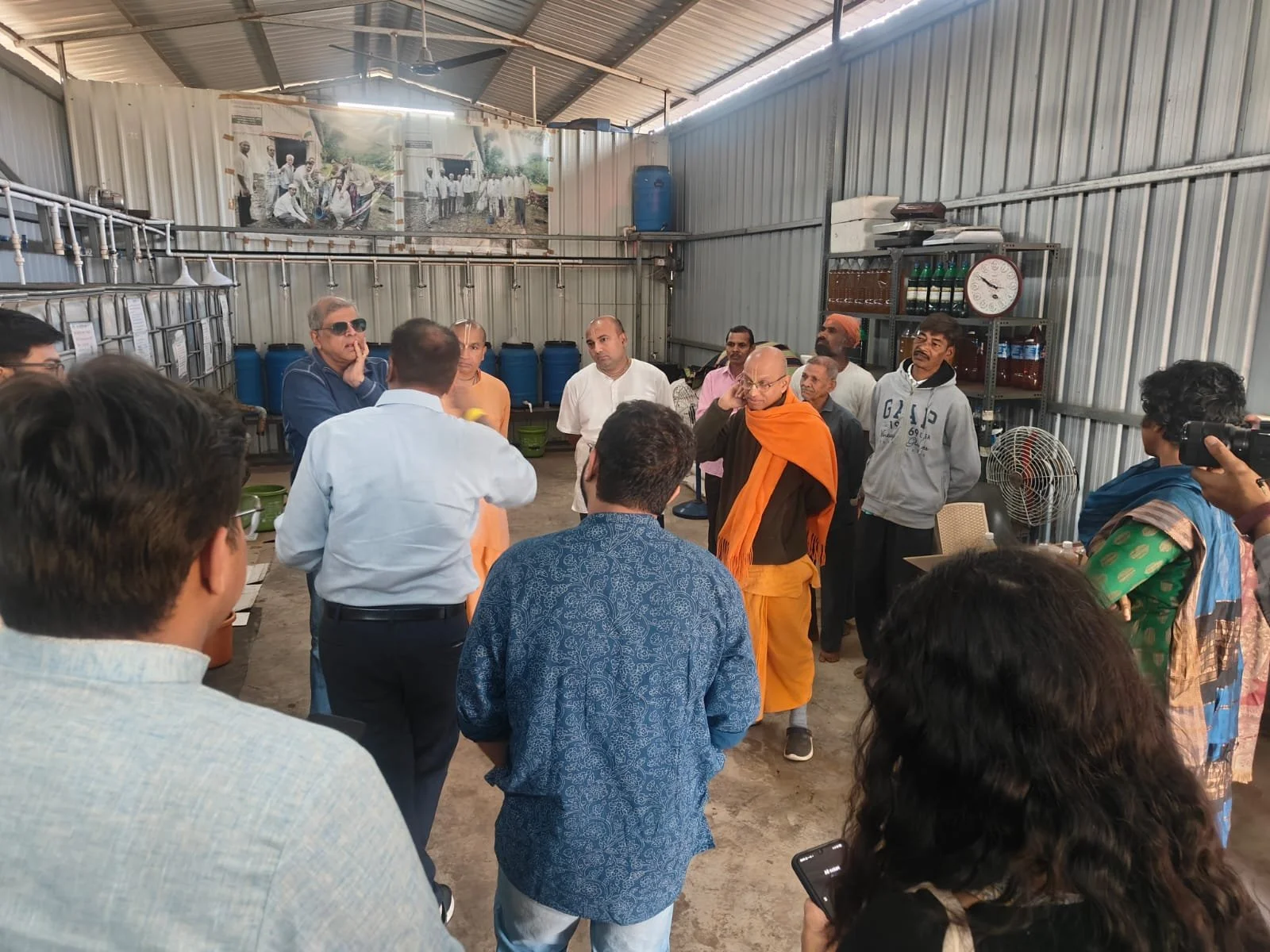
A bio-inputs resource centre set up for villages around Palghar
Palghar’s context is stark: small landholdings, rainfed agriculture, poor soil management, limited Rabi cultivation, and high levels of distress migration. GRD’s response has been to work at the level of systems rather than symptoms. Their agricultural interventions focus on building farmer capacity through regenerative practices -providing access to natural inputs, hands-on training, and better market linkages.
While some of the farmers’ produce is linked directly to the GEV’s kitchens, creating a guaranteed buy-in and reducing market uncertainty, GRD has also been able to conduct exposure visits for farmers to better understand organized agricultural markets to sell their organic produce at higher retail prices. This has encouraged farmers to adopt better practices, increase their revenue from farming while simultaneously strengthening local food systems.
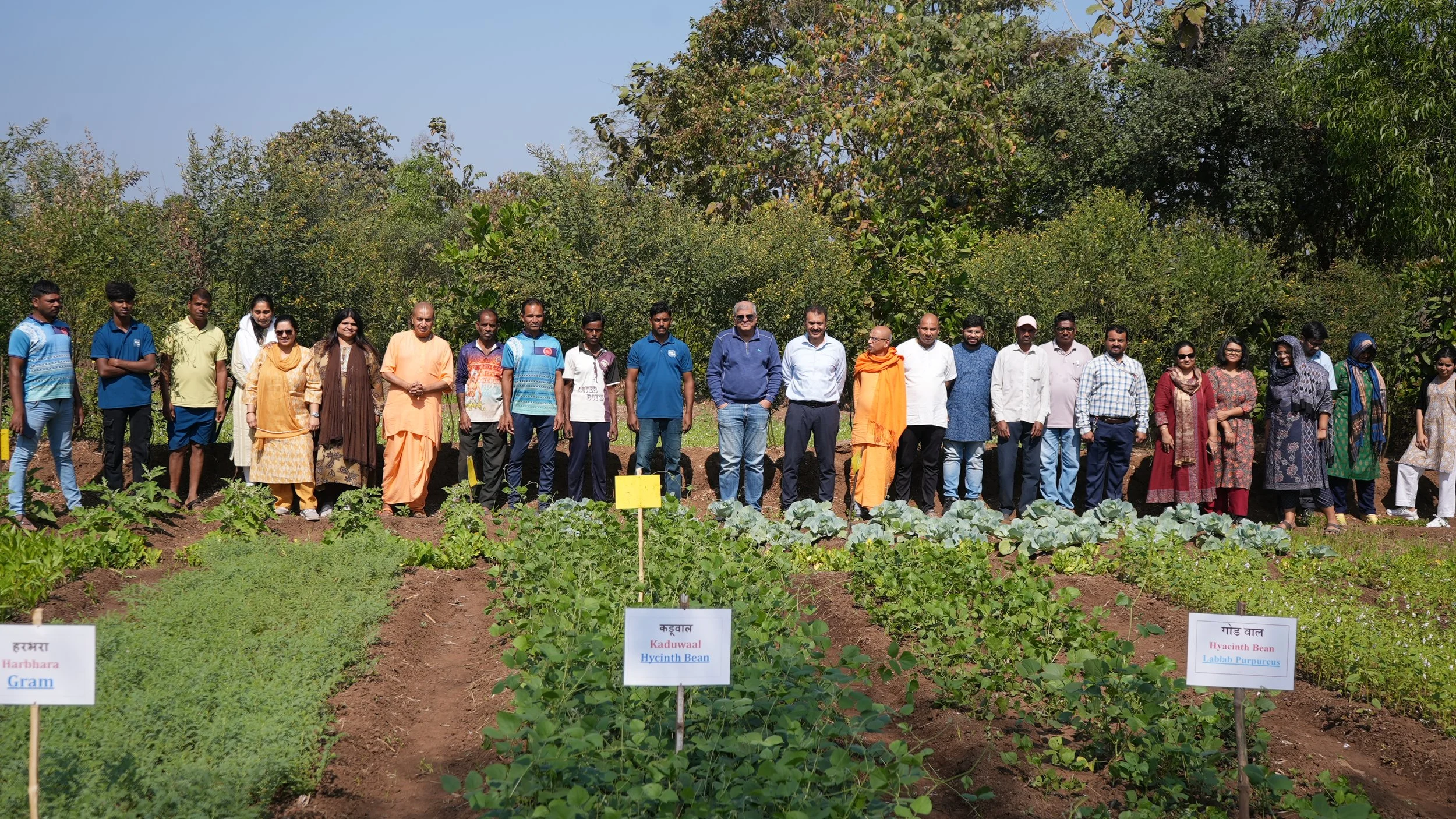
Bio-inputs have lead to farmers growing divers varieties of crops that are organic and soil nutrient friendly
They also encourage farmers to move to low/no synthetic inputs, and their Bio-Inputs Resource Centre (BRC) offer a one stop solution to farmers wanting to move to safe-practices but not having the time or inclination to make bio-inputs on their own. The BRC supports farmers from multiple villages by creating a local hub for them to get access to high quality bio-fertilisers and bio-pesticides. This has reduced dependence of the farmers on chemical fertilizers and pesticides- which are harmful for direct consumption and lead to land degradation, and has enabled them to grow local, diverse varieties of crops which are organic, soil nutrient friendly, and thrive due to the farmers’ access to bio-inputs.
The BRC unit was a great demonstration of how decentralized, relatively low-cost infrastructure can become a shared community resource when paired with training and trust. Similarly, their seedbank that supplies indigenous seeds to farmers underscored the importance of conserving these varieties (~300 seed varieties of rice and millets) - not only for climate resilience, but also for nutrition and health. GEV has also encouraged farmers to grow these indigenous varieties by integrating these organic crops into the ashram’s own food systems. Today, over 2,000+ farmers across more than 100 villages have been supported through these efforts, contributing to conserving and enhancing the quality of local soil.
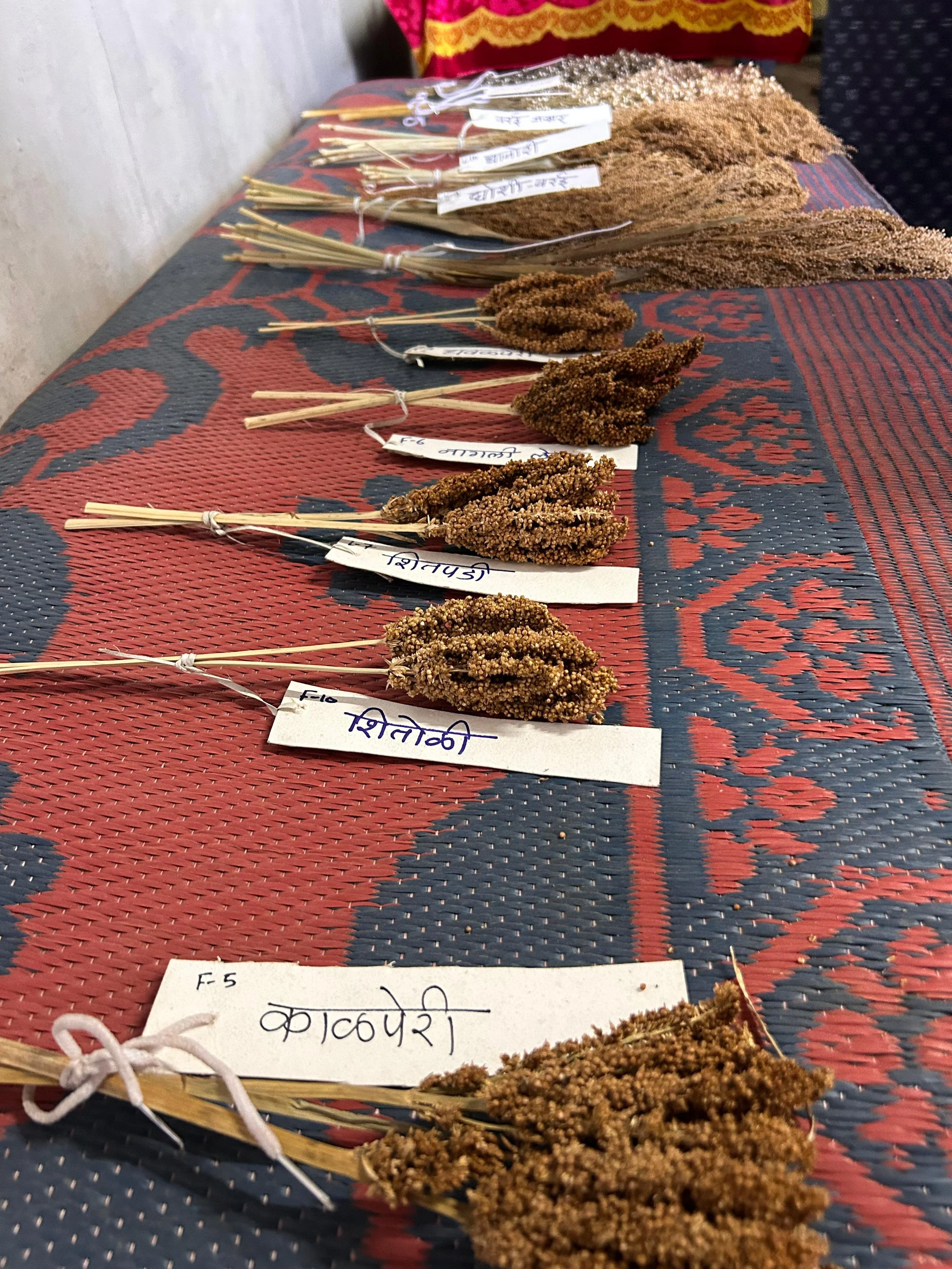
Conserving seed varieties that are climate resilient
All these pieces fell into place when we visited their Wadi program. Their tree-based farming model combines long-term planning with short- and medium-term income streams. Farmers plant fruit trees such as mango and cashew for returns in three to five years, while intercropping with jasmine, marigold, and vegetables generates income within the first year. The results are tangible: the value of crop production among enrolled farmers has increased from approximately ₹10,000 - 30,000 to between ₹1-3 lakhs annually, significantly reducing the need for seasonal migration.
Water conservation is the backbone that enables these livelihood gains. Through desilting of ponds, construction and repair of farm ponds, lift irrigation systems, and solar-powered infrastructure, GEV has improved access to water for both drinking and irrigation across 50 villages, benefiting over 13,000 people. These interventions have expanded the area under cultivation, especially during the Rabi season, and reduced vulnerability to erratic rainfall.
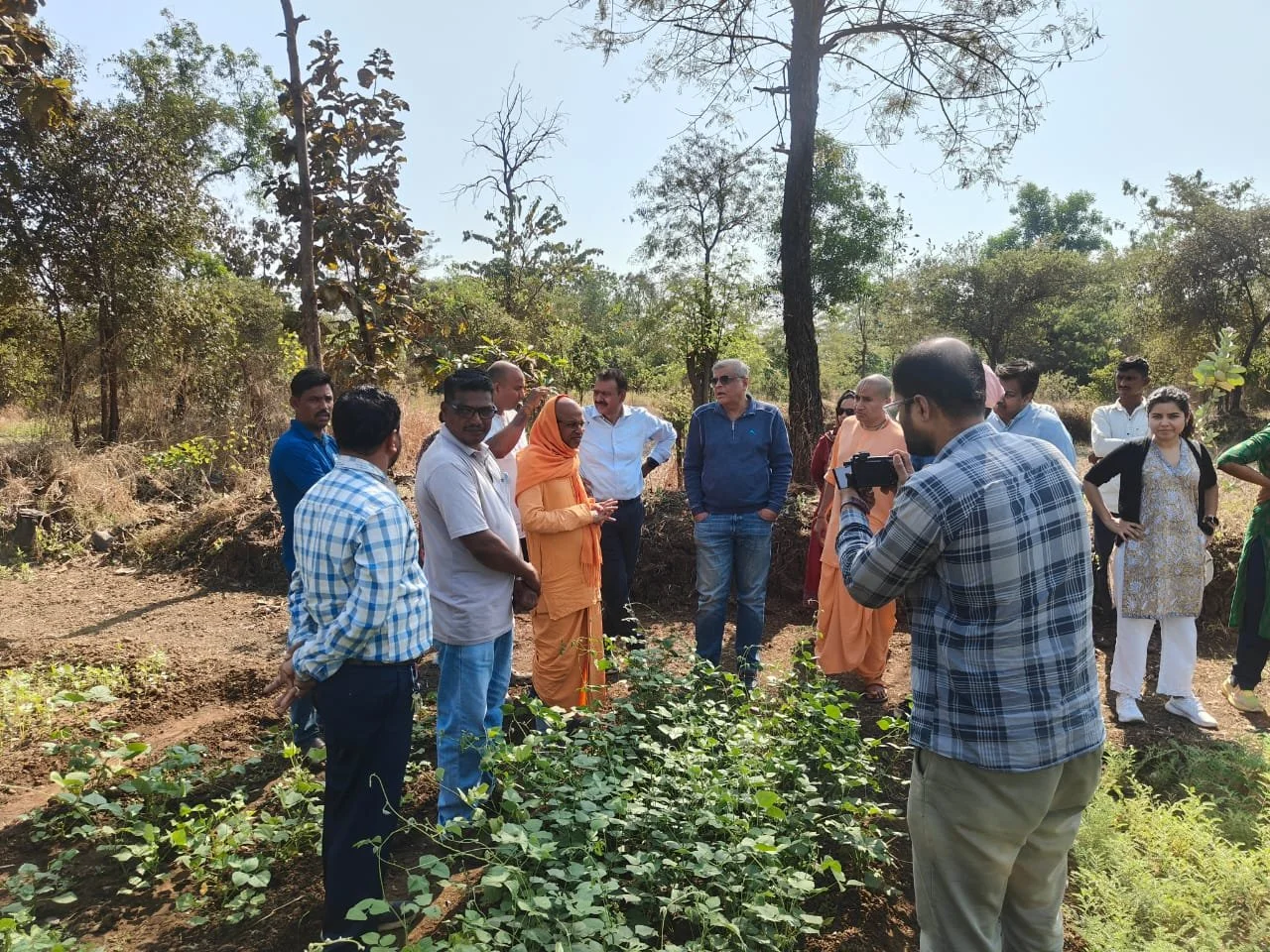
GEV’s Wadi programme
These programs under the ambit of the rural development team are strengthened by GEV’s holistic approach towards working with the community. Their initiatives include helping the community get better access to health, menstrual hygiene, nutrition, education, and creating awareness on access to government programs. Linking this to spirituality has also moved farmers away from indulging in substance abuse and alcoholism, demonstrating how faith-based institutions can play a transformative role when they engage seriously with ground realities.
GEV has been able to convert a largely degraded patch of land into an oasis of conservation, circular economy, and spirituality, and by organizing multiple events such as “Meri Maati-Meri Thaali”, it has also ensure urban communities engage with the rural communities to understand how they’re working to save local ecosystems. The key takeaway for our team was clear: sustainable rural development is not about isolated projects, but about building locally rooted systems that align ecology, economy, and community well-being.