
Scaling Impact Soulfully - What the QUEST Story Teaches NGOs & Funders About Capacity Building
Deepa Varadarajan, Cofounder, Pramiti Philanthropy Partners & Amit Chandra, Cofounder, A.T.E. Chandra Foundation
This blog is written with deep gratitude to the team at QUEST, for giving us the opportunity to partner them in our Capacity Building Vertical. It is dedicated to the memory of Amit’s good friend, the Late Shri YM Deosthalee, who deeply believed in the goodness and capabilities of the team at QUEST.
In our social sector, conversations about scale often default to non-linear growth – How does one quickly add geographies? Build a larger team? Multiply one's budget? The widespread belief is that for impact to matter, NGOs must quickly become massive. Yet, some of the highest impact stories follow a different trajectory—one where institutions grow stronger before they grow larger. Or where ideas travel much farther than the organizations themselves. Can such arcs be deliberate?
The journey of the Quality Education Support Trust (QUEST), an education nonprofit based in Maharashtra, offers a longitudinal view of this alternative path. Over nearly two decades, QUEST evolved from a small study circle founded by a group of college buddies, into a knowledge-institution influencing government systems and policy in early childhood education. Its story provides a practical playbook for NGO leaders, CSR leaders, and foundations—on how impact deepens when organizations are allowed to deliberately invest in evidence, leadership, systems, and partnerships.
PHASE 1: EARNING THE RIGHT TO SCALE (2005–2009)
QUEST began as an NGO that was very clear that it did NOT want to chase scale. Its origins lie in a study circle founded and supported by professionals such as educators (led by Nilesh Nimkar), an actor (Atul Kulkarni), and others (such as the late Shri YM Deosthalee, Director & CFO of L&T). Working in seven villages in Wada, from the outset, its defining choice was to privilege evidence over expansion.
Rather than relying on anecdotal success, QUEST focused on building diagnostic tools to assess student learning in language and mathematics, alongside instruments to assess teacher competence. Data was gathered to understand context and improve practice, not merely to report to donors. This ethos was reinforced when a Tata Administrative Services fellow embedded with QUEST helped formalize an impact assessment system. All this, before the organisation had been fully institutionalized!
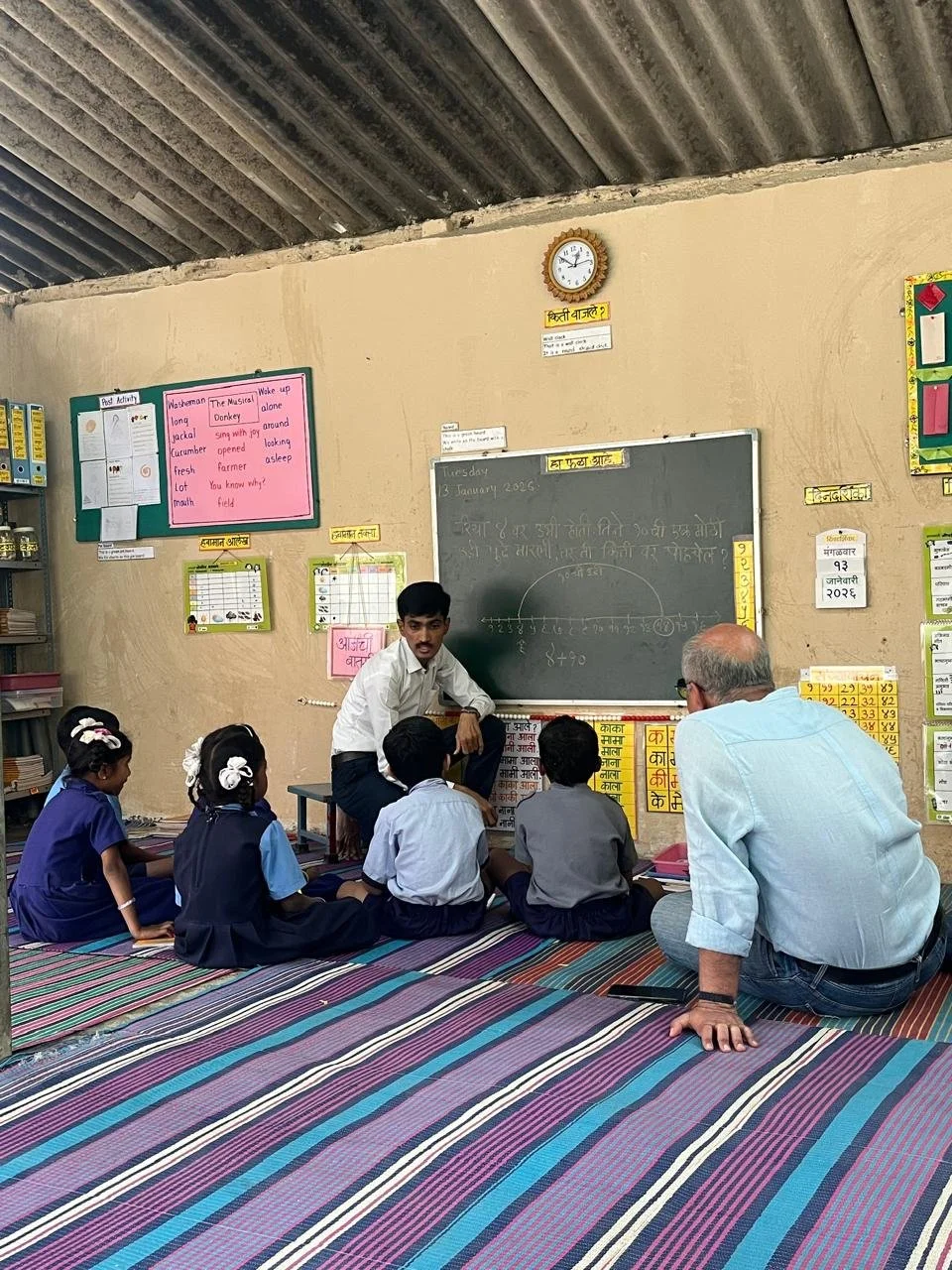
A class in progress, Sonale, Maharashtra
This evidence-first orientation proved decisive when QUEST was invited to expand into Nandurbar district with Tata Trusts’ support. The expansion brought immediate institutional scrutiny. A rigorous audit exposed the absence of formal accounting systems—an experience trustees later described as a “nightmare.” Yet this moment forced QUEST to start the journey to professionalize, appointing financial advisors, instituting workflows, and embedding compliance discipline. The lesson was clear: early investments in evidence and financial systems are NOT bureaucratic overheads. They prove to eventually be the bedrock of resilience.
The lesson: Build evidence from a systems lens, inculcate a data-culture, and strengthen internal processes, as strong foundations before chasing scale; Funders who back institutions, not just programs, enable lasting impact and make responsible scale possible.
PHASE 2: BUILDING THE INSTITUTION, NOT JUST THE PROGRAM (2010–2018)
As QUEST grew, its main constraint was no longer pedagogy, but leadership and organizational design. Founder Nilesh Nimkar found himself being forced to spend more time managing operations and fundraising than engaging with classrooms – much against his will. At this point, mentorship from the Late Shri YM Deosthalee, former CMD of L&T Finance, reshaped QUEST’s trajectory. Deosthalee ji provided something invaluable, mentorship via nudges, personal support, and opened up his connects to help QUEST. He eventually did something rare in philanthropy – when he had confidence that QUEST was scaling, he provided corpus funding material, at that time, to its budget. This non-programmatic capital set up the organisation nicely – helping it think more deeply about investments for talent, systems and being bolder with expansion.
More importantly, Deosthalee ji challenged QUEST’s assumptions about leadership and potential for impact, based on what he saw. When the idea of hiring a CEO surfaced from within the organization, Deosthalee ji insisted that given where things stood, leadership could not be outsourced. QUEST had built “islands of quality,” but unless it could demonstrate that its ideas worked at scale, its public-good ambitions would remain unproven.
Partially, with funding from A.T.E. Chandra Foundation (ATECF), this period also resulted in dialogues that catalyzed deep institutionalization. Leadership development through the Dasra Social Impact Leadership Program (DSILP) exposed QUEST’s core team to strategic thinking. A consulting engagement with Dasra reshaped governance structures, clarified roles, and translated ambition into prioritized roadmaps. Executive coaching further supported the founder’s transition from practitioner to organizational leader.
ATECF also played a complementary role by helping professionalize QUEST’s fundraising and HR systems. Budgeting formats were overhauled to account for indirect costs, and a dedicated fundraising role was created. A new leader (Preeti Shenoy) was brought in around 2018-19 to bring dedicated focus to this important function. As a result, the founder’s time spent on fundraising dropped sharply, freeing up his bandwidth for innovation.
The lesson: scale requires a shift from doing to leading. Funders who invest in leadership and core capacity unlock exponential impact.
PHASE 3: SCALING IDEAS, NOT JUST THE ORGANISATION (2019 ONWARDS)
By 2019, QUEST made a strategic choice: it would scale its impact beyond scaling its size. It repositioned itself as a technical and knowledge partner for early childhood education.
QUEST began the journey of strengthening systems RATHER than replacing them. It started working bottom-up with district administrations, eventually signing MOUs with multiple Zilla Parishads. It contributed to curriculum design and training through state institutions, influencing learning for nearly One lakh Anganwadi workers! Simultaneously, QUEST partnered with civil society organizations across states, building their capacity over several years before exiting.
Technology began to act as a multiplier, not a driver for its work. Platforms like Gatuvit enabled blended teacher training, while digitization of assessment-intensive programs saved hundreds of staff hours. Technology freed human capacity for mentoring and quality assurance rather than replacing it.
Today, QUEST reaches out to over 1.2L + children across 3,846 anganwadis (AW) through their Palavee program annually, over 15K teacher educators across age groups of 3-12; is replicating the model in the States of UP, Gujarat, MP in collaboration with other NGOs. Further, QUEST has contributed in the curriculum development by the State Council of Educational Research and Training (SCERT), Maharashtra, for two structured courses for Anganwadi workers - Certificate Course in Early Childhood Education and Diploma in Early Childhood Education. These will reach additional 1L + anganwadi workers across MH.
The lesson: True scale (and perhaps impact), QUEST demonstrated, occurs when the influence on an NGO’s excellence travels much farther than its physical presence.
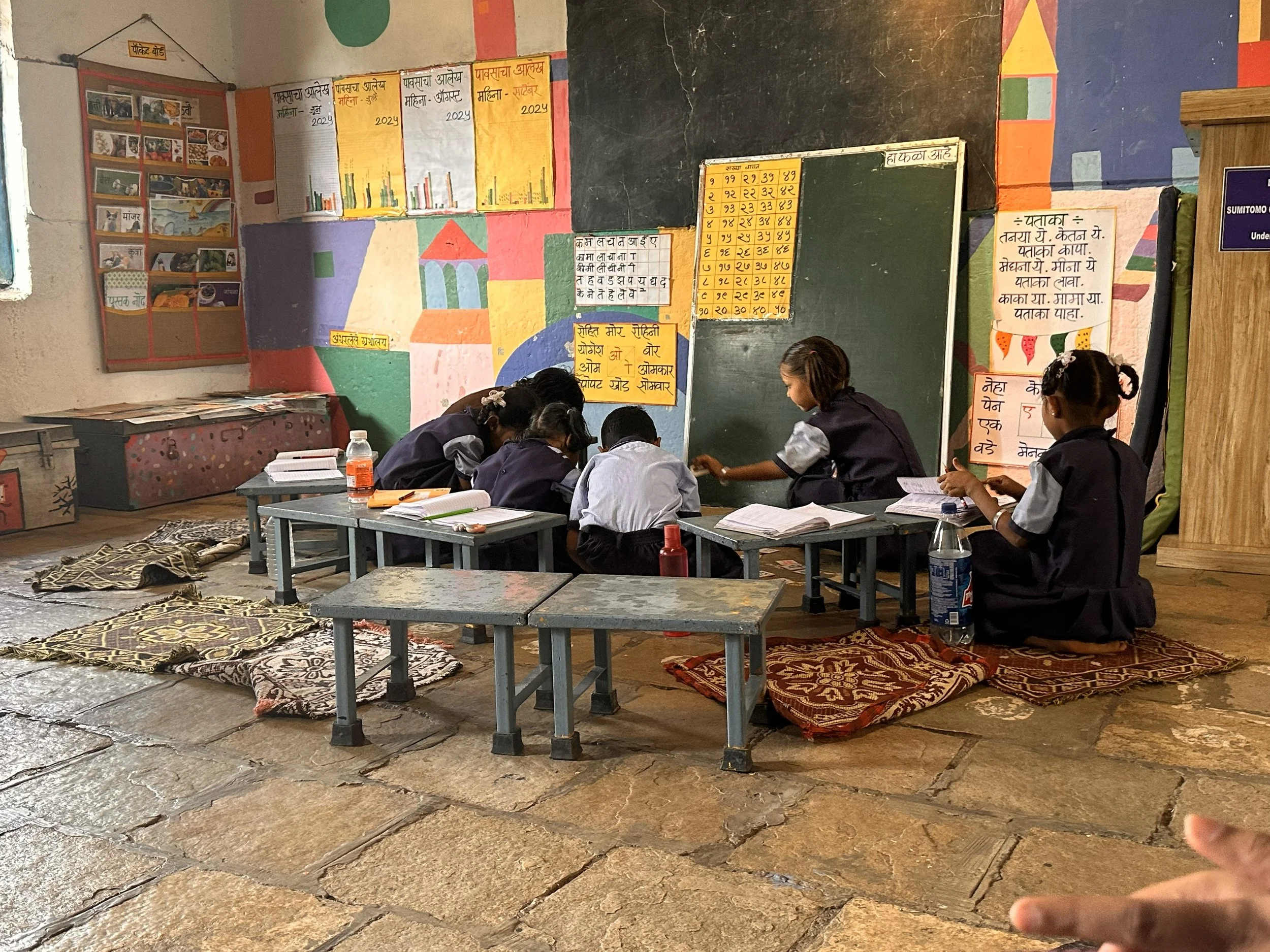
A Quest classroom in progress
EPILOGUE: In fueling their QUEST, we found our fulfilment…
Amit: It was in 2015 that Deosthalee ji told me that I had to join him to visit QUEST. He rarely made requests and this one sounded more like a combination of a plea and a command and I couldn’t say no. I had some sense of education then, given my involvement with the Akanksha Foundation, but this was different – it was not only rural, but it was also in a tribal area; it was early childhood education; it was deeply under resourced; it was a bigger issue than what I had engaged with till then. What I saw that day left a mark on me forever. I was convinced that QUEST needed to be invested in, that its impact needed to scale. When I shared my views with the group, I don’t know if they felt I was being polite or crazy, but I was very direct. Our journey with QUEST began there and it has been a deeply fulfilling one.
Deepa: What struck us at ATECF, when we met the core team of QUEST was the quiet integrity with which the organisation approached its work. It was clear as our engagement deepened that QUEST was far more concerned with being effective than with appearing successful. This conviction shaped how we at ATECF chose to partner with them as part of the ATECF Centre of Excellence (CoE) in 2019–20. Being part of the CoE meant going beyond programme funding to invest in leadership support with Dasra, enabling a fundraising hire, strengthening communication, and staying closely connected through regular check-ins. Walking alongside QUEST in these ways reaffirmed something I believe deeply: when funders invest with patience and trust in people and institutions, not just projects, they help build organisations that grow with purpose and endure with impact.
CHECKLIST: PRACTICAL TAKEAWAYS FROM QUEST’s INSPIRATIONAL STORY
For NGO Leaders & Boards
Invest in evidence early to learn, NOT just to report to donors
Professionalize finance, HR, and governance BEFORE being forced to
Accept that leadership growth is PART of mission delivery
Scale ideas and INFLUENCE, not just operations
Use technology as infrastructure, NOT a substitute for pedagogy
For Funders (CSR & Foundations)
PROVIDE non-programmatic and corpus funding (where possible)
Invest in organizational systems, including leadership development
Take RISKS and support pilots and proof of scalability
Commit to LONG TERM partnerships that allow learning and iteration
QUEST’s journey reminds us that lasting social impact is rarely linear. It is built quietly and deliberately. That, through strong institutions powerful ideas travel further than they ever could alone, and that is a great template for societal transformation.
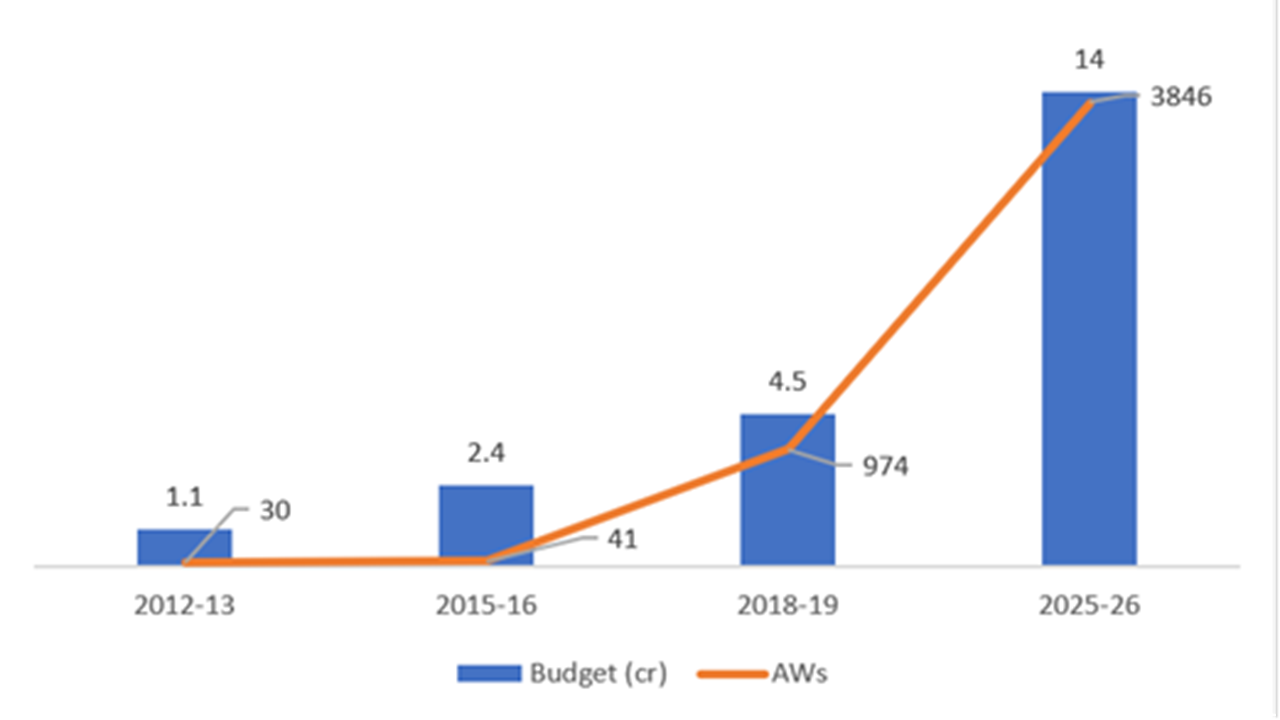
The Palavee (anganwadi - AW program) budget is ~60% of the total QUEST budget.
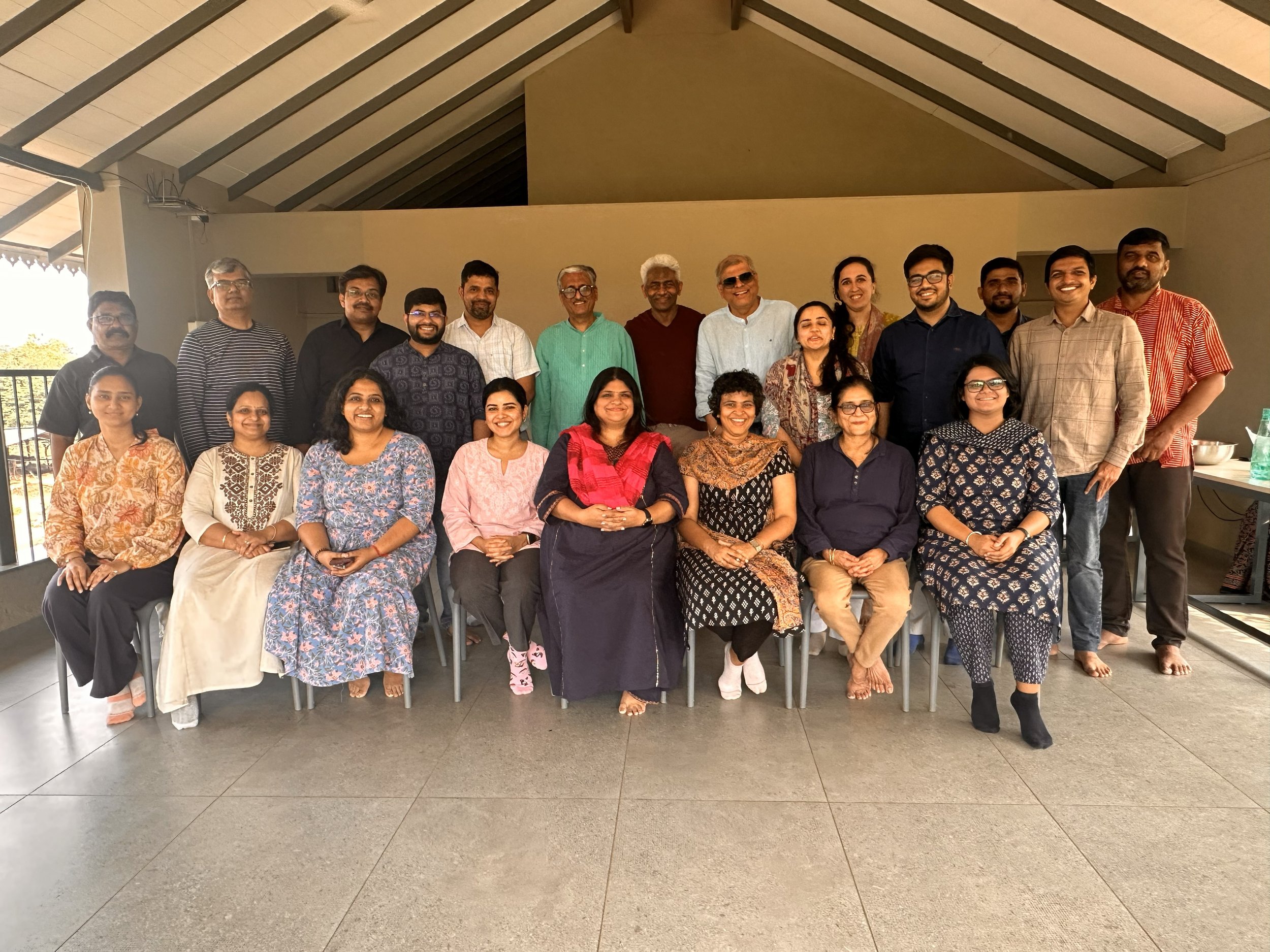
ATECF & QUEST teams post a satisfying visit to the field in Jan, 2026, Sonale, MH